
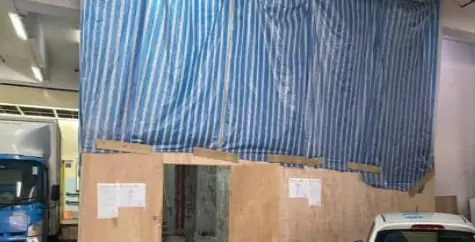
Find the people affected by the closure
Suppose the main entrance to a residential building will close briefly and the rear entrance remains available. Observe it early in the morning, at lunchtime and in the evening. Where do wheelchair users usually meet their transport? Where do parents leave pushchairs, when do cleaners move refuse bins and where do shops accept deliveries? A tenant may go days without passing the lobby noticeboard. Check how tenants, night staff and regular delivery teams receive service updates. Keep individual arrangements on the management team’s working list. The public notice can give the affected location and the alternative arrangements people can use.
Write the notice for a first-time visitor
Give the date and day of the week, start time, expected reopening, entrance or floors affected, and a small plan with a clear orientation. On a podium, describe a fixed landmark as well as any shop name that could change. Ask a colleague unfamiliar with the building to follow the directions from the street and note changes of level, access-controlled doors and ambiguous turns. Provide a practical way to ask management about individual access arrangements. In buildings issuing Chinese and English notices, compare the stated hours, entrance names and contact details in both versions before display or distribution.
Check exactly who will lose a service
Where the works affect water, a lift or a delivery entrance, ask the relevant specialists and the building manager to agree the actual extent of interruption. A concealed connection above a tenant’s ceiling may leave part of the area unverified. Identify the confirmed area, the item still being checked and a time for the next update. On the internal contact sheet distinguish the duty manager, the responsible contractor and the person issuing notices. If work finishes early, confirm service status through the agreed check before the designated person announces reopening. Tell the next shift about any location that remains restricted.
Give a changed programme a clear update
Reference the date or number of the earlier notice when issuing a change due to weather, deliveries or access. Identify which arrangement still applies, which day has moved and when another update will be issued. If tomorrow’s work is postponed but a new date has yet to be confirmed, give both facts plainly. Replace previous versions in the lifts, lobby, service areas and electronic channels, then ask the next shift to check for missed copies. Where construction noise restrictions may apply, have the contractor and consultant confirm the relevant arrangements. The management team can then communicate what occupants should expect on that basis.
Keep private access arrangements off the noticeboard
For work inside flats, the public notice can give the management contact and invite residents to make individual appointments. Keep only the booking information needed by the relevant staff and establish who will identify the visiting team on arrival. A public board has no need for a resident’s telephone number, medical details or hours when the flat will be empty. A contractor’s working list may use a flat reference, an agreed appointment and a management contact, with any additional details shared through an appropriate channel when needed. Follow the building’s privacy arrangements for handling the contact list once it has served its purpose.
Listen to the first shift after reopening
Ask the first shift after reopening to log the enquiries it receives. Visitors may still follow old directions, delivery staff may miss the entry bell or a shop opening early may find the route poorly lit. Give each observation to someone who can act on it. If a difficulty recurs, revise the next drawing, move a sign or distribute the following notice while shops are still staffed. Keep a copy of the last version, its distribution channels and the actual reopening time. The next entrance closure can then draw on the experience of people who used the route.